Concepts of gender in romance fiction are complex enough that people can write (and have written) PhDs on the topic. When an author sits down to write a love story, they are bringing an enormous amount of cultural baggage with them that is important at the very least to acknowledge. They bring their own gender identity, their concepts of male and female and non-binary, their understanding of the history of gender identities and relations and their biases and preferences – as well as all the representations of gender they have been exposed to over their lifetime.
Why is this important? Because not all representations of gender are uplifting or helpful. Although romance can have conflict and angst, the genre exists to bring hope through overcoming these obstacles, but part of that hope I believe is also rooted in the (not yet reached) ideal of equality and mutual respect between the genders.
Romance from earlier eras explored female agency through the structures that existed at the time: more overtly male-dominated societal structures. The fantasy element came from that female main character circumventing those structures by making the powerful man fall in love with her. This framework still exists within the genre today, but there is much more space (and arguably necessity) to challenge those power structures themselves.
I’m not saying we can’t have billionaire bosses in romance – the market shows I would be an outlier to hold that opinion. But there still needs to be a disconnect between power and masculinity. The male main character might be powerful, but that’s not an important part of his masculinity – or attractiveness, for that matter. And a boss who exploits that power, especially over women, would not be a traditional romance love interest, in my opinion. That becomes dark romance for me immediately and if it’s written with a light touch, I can’t sustain the fantasy enough to read it.
This is a big opinion, but I don’t think romance main characters in this day and age should behave in an actively misogynist manner at all, even if they are redeemed later. Yes, he might find the female main character attractive, but he should never equate her appearance with her value or competence or treat her any less because she’s a woman. To me, this stops me being able to dive into the contemporary fantasy of two equals falling in love.
Conversely, I strongly resist the idea that romance love interests have to be strong or powerful at all. For years, publishers have believed that the market demanded strong men in these leading roles, but I think it’s important in this day and age to show the fullness of masculinity as it truly is and not present a whole gender as a pushy stereotype. I like the advent of the ‘dad bod’ in romance (see Rachel Lynn Solomon, Rebekah Weatherspoon, Cara Bastone, Marie Lipscomb and some Tessa Bailey) where the man’s attractiveness is not based on a six-pack. A dream guy is someone who understands and accepts you, not someone who will pay the bills or tell you what to do – women can do those two things perfectly well themselves.
This was part of the joy I had in writing Tiziano in Italian Sunshine. I purposefully put him up against the stereotypical ‘Italian romance hero’ in the form of Filippo in the book and of course Tiziano won out, despite his pasty complexion, visible piercings and simple lifestyle.
Of course it goes much deeper than the appearance of the love interest. I enjoy exploring the power dynamic where the female main character is arguably richer and more successful than the love interest. I like to focus on how the characters bring out the best in each other, challenge each other to grow and overcome their obstacles and find richness of life together – that’s real love to me, not ogling someone’s legs, seeing a pretty face and feeling possessive about them.
There are just as many (if not more) nurturing men in real life than pushy ones and I’d like to see the full spectrum of people who identify as male represented in romances, rather than a simplified picture of masculinity that is inaccurate and unhelpful. I know readers are able to discern the differences between real life and fiction, but I do worry that women might accept casual misogyny more readily if it’s been presented to them in the form of a swoony romance hero ogling a female main character – or that men will start to think that’s what women want. (Facet to this: I have seen some very funny videos in Instagram by readers who say they know in real life they don’t want a mafia boss or a big green alien, but in their books they can switch that off. I just struggle to switch that off, particularly in a contemporary romance that’s supposed to be uplifting).
I had a bit of a struggle while writing Snow Days actually because I didn’t want to make the female main character a ‘damsel in distress’ as I think that’s been done and doesn’t need to be done again these days. But, I had a woman who knows nothing about the alps and a mountain rescue officer. I couldn’t avoid the trope entirely, so I just had to use it carefully and part of the result is that Yannick is a supremely soft character who doesn’t know what to do with all of his emotions until Luna comes along and helps him put himself back together. He’s a voice of authority (a gendarme who is often in a position of leadership), but someone who uses that very gently and humbly and I hope my readers will appreciate that about him.
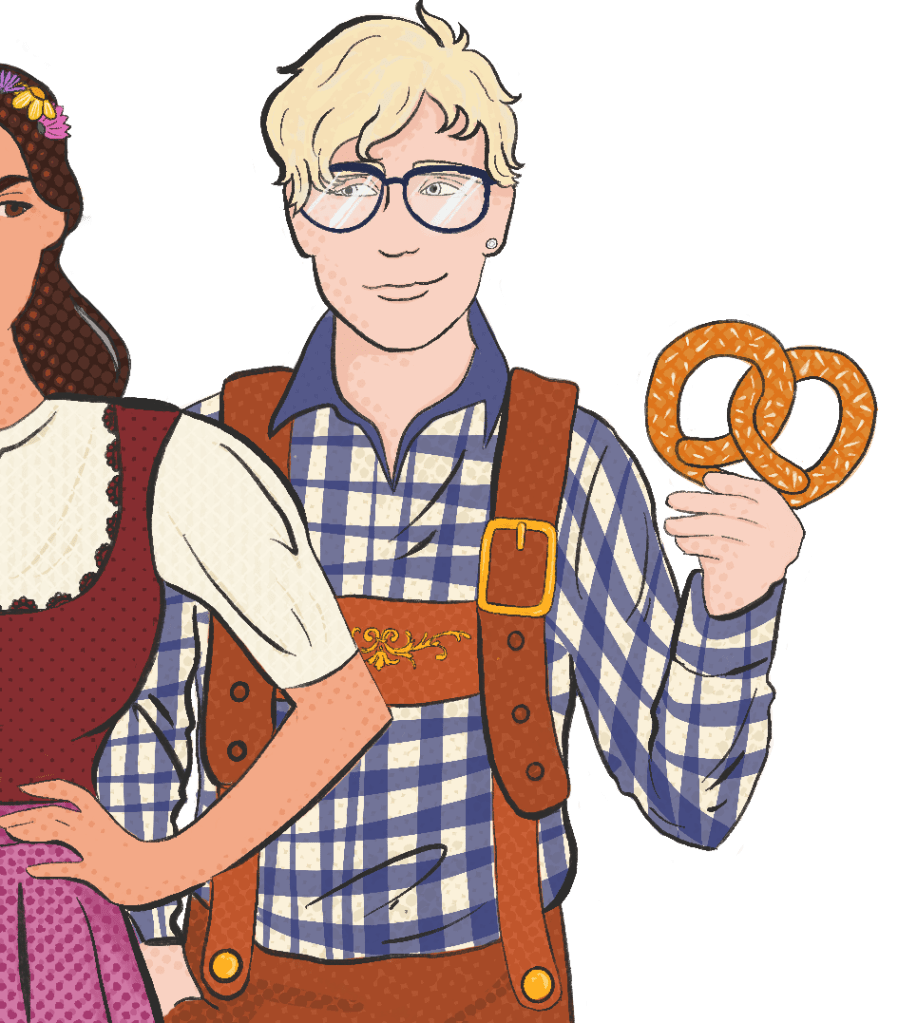
I challenged myself to go a step further in my next Lilo Moore book (which is what the other pen name is for after all) and we have a love interest who actively rejects some of the traditional masculine attributes. He is male, but he has a few natural attributes that gave him problems in the past with traditional stereotypes (he’s bisexual and has albinism, meaning he looks different to everyone else and he feels different to heterosexual males too). His response, particularly in recent years, now he’s found himself, is to embrace his differences. He wears both a dirndl and lederhosen on occasion throughout the book, neither of them determining his actual gender because they’re just clothes (he skinny dips at one point too!). He wears eyeliner. He’s vegan (which of course has nothing to do with his gender, but there are some outdated ideas of ‘masculinity’ that would include barbecuing a steak). He’s shorter than Fi. He lets himself be vulnerable. But he’s also super hot and I adore him.

 Leonie Mack
Leave a reply to More Point-of-View Musings – Leonie Mack Cancel reply