
As a romance author, writing about a sexual relationship is something I do with each book and it’s therefore something I have to think carefully about in a variety of contexts and discourses – the wider cultural context, readers and market.
I have always read steamy books and my earliest attempts to write were also steamy books (think Amanda Quick and Susan Elizabeth Phillips). I definitely read more from the American market than the British market when I first started writing more seriously with a view to querying and eventually publishing. What’s especially interesting now is how the market is changing – but possibly not as quickly as it feels.
I’m generalising here, but the sex scenes in cosy British romances have traditionally been closed-door or in little detail or told with a sort of funny awkwardness rather than titillation, whereas drawn-out sex scenes and high sexual tension have been around in US titles for much longer. Now with the advent of super high-heat spicy romance and BookTok the trend towards higher heat has been crossing the Atlantic and it seems every publisher is interested in the steam.
Mostly, I think this is a good thing. I stumbled into my Leonie Mack attitude to writing sex (I say it’s ’emotionally described’: you get a few pages of character-driven foreplay and a few paragraphs of hinted sex with the feels instead of the physical sensations) as a sort of stab in the dark about the British market. But I think when the characters decide to sleep together is a pivotal moment for their relationship and not describing it at all feels artificial. We’ve heard the characters’ innermost thoughts for however many pages, but here we have the door slammed in our faces right at the moment when they have to face their inhibitions and fears and take a giant step in the other person’s direction. Also from a plot point of view, it doesn’t make sense not to address the subject of sex in a romance. I also enjoy spicy scenes and appreciate the heart-racing effect of these moments.
My one concern is whether, in its search for ever more spice, the market is losing sight of the heart of a romance. You can get an emotional hit from things other than sexual tension (and I don’t mean things outside the romance – I mean emotional moments within the romance). If a reader is only looking for sexual tension and spice, that is a slightly different genre to what I’d call a romance, where the butterflies, the falling-in-love-thing, the emotional journeys and wounds and interaction between souls are what keeps the story rolling, regardless of how much sex and sexual tension is described.
Some love stories naturally have more opportunities to describe sex and others little, just as people are willing to take that step at vastly different stages of knowing someone. My books are mostly slow burn, where the characters have to take many steps before they are ready for a sexual relationship – all of those steps full of emotional (and sexual) tension as the characters have an impact on each other. But even within my own books there is variety.
Jenn and Tiziano fell into bed actually rather early for me, at about the 45% mark! But with Luna and Yannick, both with responsibilities and emotional wounds that stop them from pursuing a romance, they don’t even kiss until the 60% mark (or possibly even more – although when they do get there, the relationship becomes a really big deal for Yannick as he starts to open up, which was really difficult for him). Lots of things happen up until that point. They spend a lot of time in close quarters, reacting strongly to each other. But it’s all emotional, so readers will have to come along for the emotions and not only the sexual tension.
I decided to write my Lilo Moore books much spicier partly because it seems to be popular in the market right now but also because I enjoy writing sex scenes too. I do know that Beer Fest was a little too spicy for some readers, so this is where we hit the problem.
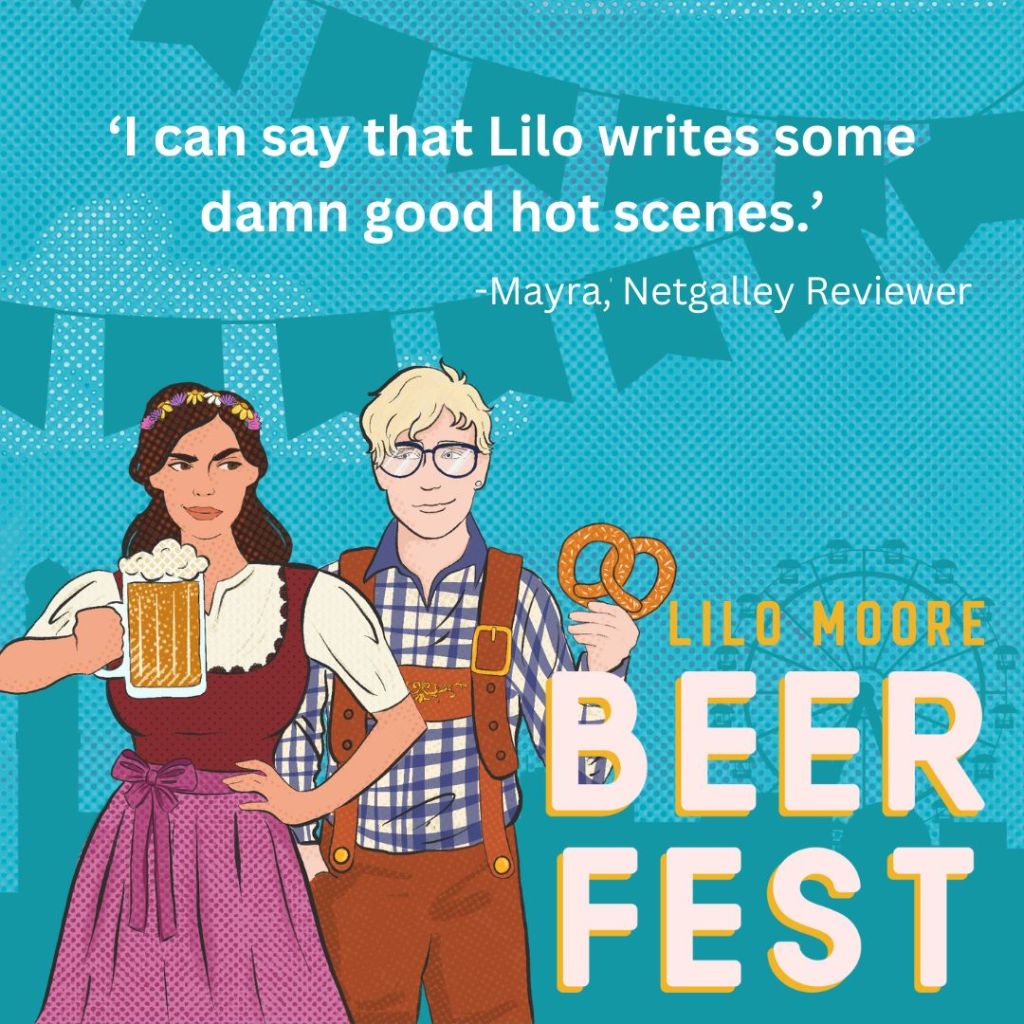
The heart of romance is the emotional pay-off. Focussing on the spice can make a rollercoaster of a book, but the emotional bond is important too. It’s a balance that every romance author will have to work out for themselves and every reader too. There are infinite variables – even down to the mood of the reader. Readers might need to read widely to find their favourites and be a bit tolerant that not every author writes exactly the combination of emotional and sexual tension that that reader wants (because another reader will prefer it a different way). Even a publisher can’t predict what level of spice will work best.
A system for labelling books according to spice level would definitely help readers’ expectations, but I would rather see BookTok-like enthusiasm for the swoon factor and not only the horny factor. Of course readers want what they want, but I will always write all the swoon, regardless of the heat level.
Publishers seem to be trending towards high-heat romances, which is good, but I also think at some stage they will remember that there are readers out there who are more interested in the emotional plotline than just the sex – and that perhaps having too much titillation in a romance is actually taking the genre somewhere it doesn’t want to go. Sex might sell a book, but it won’t make a reader fall in love with it.


 Leonie Mack
Leave a reply to Lynn Bryant Cancel reply