In today’s world, we’re surrounded by other people’s success or failure and told that this could be us if we only… We’re told to dream big and that you can’t achieve what you want if you don’t believe you can (and invest in your chances of doing it).
While in psychology and for mental health, these mindset and attitude effects can be significant, in the real world, there’s a little more to success than believing in it. I should warn you now that this isn’t going to be a happy and uplifting post, offering solutions to all our woes. Although I know I tend towards negative thinking and that doesn’t help me, I also don’t think it’s necessary to preach a positive mindset, ignoring the facts. But I do hope to lift the pressure we feel when we see others succeeding when these success measures elude us.
I have struggled with imposter syndrome for my entire writing career, believing I didn’t ‘count’ as a real author for years, until I had many books under my belt. At first, I dealt with it by focusing on the writing: if I write and publish, I’m an author. It’s true. Many authors might look successful on the outside, but on the inside, we all write books – published and unpublished authors alike.
This is still my best tip for dealing with the ups and downs of publishing: focus on writing and craft.
But while this attitude kept me going through my first few months of dire sales and then through many harsh realisations about how publishing and the book-adjacent space works, it didn’t really cure my imposter syndrome. I still felt like no one cared whether I was writing or not (except a select group of people I never managed to meet who bought my books on Amazon), I felt as though I hadn’t ‘made it’ as an author.
I’ve heard and read many encouraging things about not listening to your imposter syndrome, how women are more susceptible etc etc, but I found none of it really helped me. Now, I have more experience in the publishing industry (really, it takes years), and I understand why:
It’s true, I’m *not* a real author by some measures/by some people’s opinions.
The issue isn’t shutting up my own personal critic. The issue is caring what others think – and an industry that is not at all a meritocracy.
Not all books are born equal. There was a brief period when the opposite might have been true, before we were all overwhelmed with choice. Now, at the lower-sales/lower-value end of the spectrum, most books are born equal, whether self-published or through a small or digital publisher.
But the high-value sales and large paperback volumes have never been more concentrated and elusive for authors to actually get – especially romance authors, as strange as it is to say that after the genre has apparently had a ‘renaissance’ in publishing. (A large portion of the market would never buy a ‘high-value’ romance, because of lingering misogynistic perceptions of the genre that automatically place it in the ‘low-value’ category.)
One book might have an enormous marketing budget and another has nothing. One might be chosen for special distribution (for example, in supermarkets) and another not – quite possibly (probably?) by someone who hasn’t read either book. Retailers and publishers are interested in what will *sell*, not necessarily what readers will enjoy, so the content of the book becomes less important (to them – to authors, we live and die by our words) and the overall package and tropes (in the case of romance) are the key.
Some publishers have solid relationships with retailers, making it much more likely that their books will appear in greater quantities on the shelves. US bookstores very rarely stock books that have been published out of the UK, so automatically American publishers have a much greater potential for retail sales.
It’s not imposter syndrome, it’s a dawning understanding that my books have to fight for every sale.
I am incredibly fortunate to have landed with a publisher who has continued to publish my books, even when sales started slow and have been up and down (as low-value sales often are). My publisher also pays for marketing for my books, which many don’t, so I am aware things could have turned out very differently for me.
I could have ended up with a different digital publisher that just releases the books and lets them sink or swim (inevitably sink, these days). I could have ended up with a publisher that demands high sales and drops authors if they don’t achieve this, meaning I might never have got a second contract. I am truly incredibly grateful to have had the opportunity to build a backlist and there is a little bit of truth, still, in the self-publishing guidance that more books equals more sales for all of the books (but it’s not as pronounced as it used to be).
I have had some of the high points of being an author: 3 books in the Works, 2 books in the UK Amazon top 100, overall some really pleasing numbers for ebook sales. One book distributed also in WHSmith and it was actually included in the independent publisher book charts and did well (the experiment by my publisher was not repeated, probably because it was too expensive or WHSmith didn’t agree to a future partnership – so even though my book sold well in paperback retail, I never had the opportunity to repeat this).
I’m also aware this is a bit of first-world problems, because it’s getting harder and harder to bring out a first book and there are many brilliant authors who are struggling to find the start I did, even though mine wasn’t the perfect start. I have my two self-published books to keep me humble as well. They barely sell at all, because I tried something a little different, rather than sticking with the tried and tested formula, and that’s the nature of starting out these days.
But it’s not imposter syndrome to realise that my sales are low-value sales, my books do not have paperback distribution in the usual terms (the low-value print run for the Works pays less than the royalties on an ebook), my books aren’t usually included in any charts, because the official reporting skews towards non-Amazon retailers and doesn’t go into detail for ebooks.
It’s not imposter syndrome that bookstores don’t want to stock my books because they can’t return them if they don’t sell. It’s not imposter syndrome that few people remember my name, even if they have read a book or two of mine. It’s not imposter syndrome that the majority of my readers have Kindle Unlimited, so they don’t have to pay for my books at all (and I only get a very small royalty from those sales).
For a large section of publishing, I’m essentially a blank slate (with the exception of that one book that was distributed differently back in 2022), because my sales have predominantly been ebook and audio and I’m published with an independent publisher that does not buy into the usual systems (it’s literally buying in – you have to pay for warehouses at the very least).
Many authors in this low-value sector of the market are doing very well and have built reputations and large networks of readers, so I can’t say that all my difficulties are because of being shut out of much of the ‘normal’ machinery of publishing, but for most of these bigger names, marketing spend is also higher (because they’ve ‘broken out’, changing the ROI calculations for marketing spend), so it’s not a good comparison. But also, their books ARE extra special. Good on them! You know they must be amazing to have done well in this environment.
You’re all thinking: what about the two cycling books? And yes, they were distributed normally, which allowed me to go into bookstores to sign books and hold an event at Waterstones last year, things that would not have been possible beforehand (some retailers do welcome print-on-demand authors, but you have to do a lot of work to find those stores and often have a local connection. As I live in Germany, I don’t have any local connections). Bringing those books out with a ‘traditional’ publisher (although still independent, so with less clout than many other publishers) only showed me how unequal my books are born.
But in some ways this is a comfort – and my antidote to imposter syndrome. Every reader finding me is a miracle. Every repeat reader is simply down to my words, because there is no hype, so few people out there are talking about my books (because most people never see them).
Despite the depressingly honest nature of this article, I actually wanted to write it because of a real high point yesterday. My Hungarian publisher has printed a special edition of Italy Ever After that is so beautiful, my eyes hurt (and then the eclipse later on didn’t help). I’m absolutely floored by the investment that went into it and thrilled to have my words packaged with so much effort.
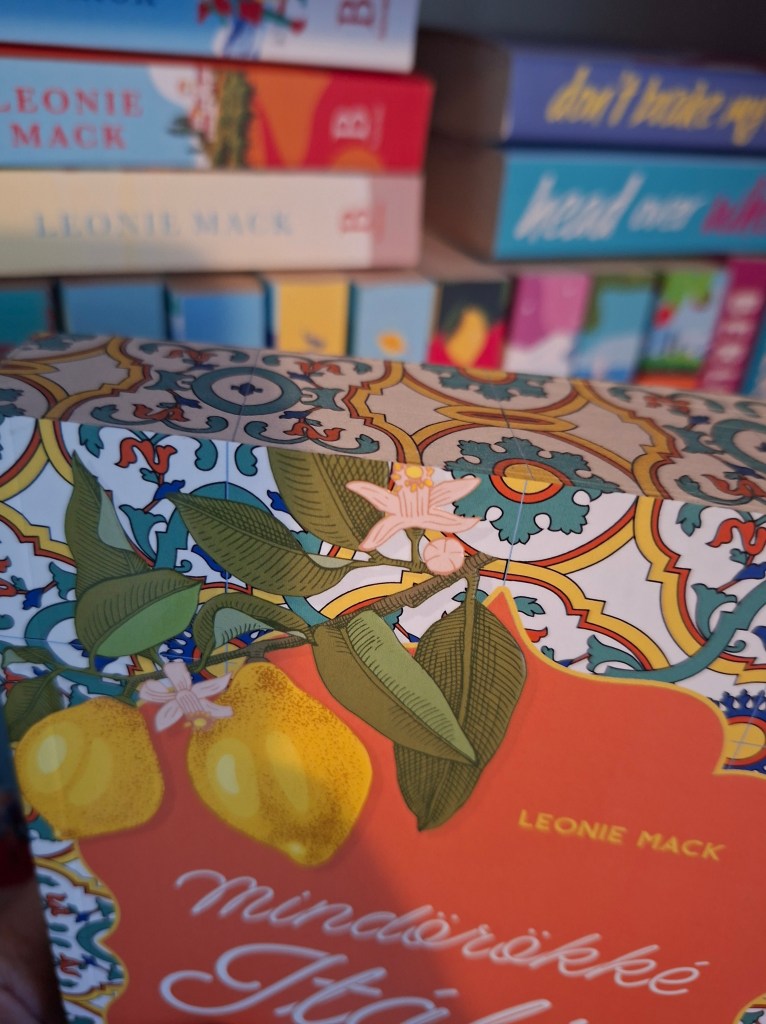
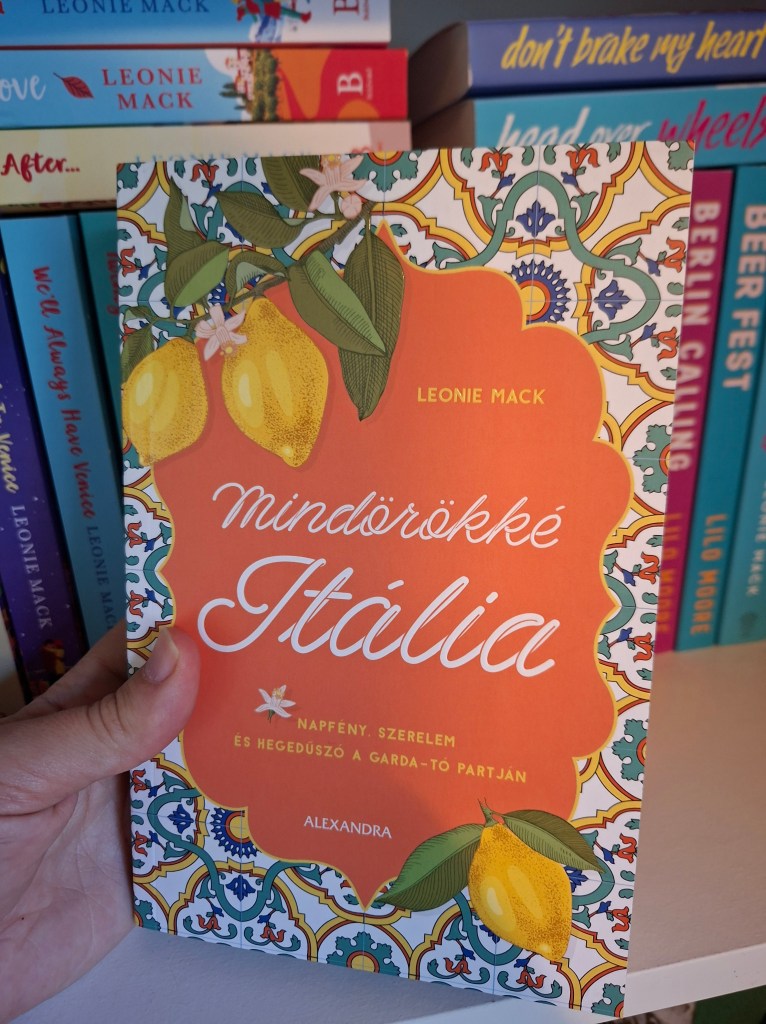
I’m quite satisfied with how my writing career is progressing – especially because there’s nothing I love more than writing books and this remains the most important part – but this gorgeous edition really brought home the fact that not all my books are equal and there are too many books for this ever to be a meritocracy. This edition has the same text as the ebook of Italy Ever After. It’s the same reading experience, but this imbues the text with so much more value, simply because of the production standards. Increasingly, as the market is flooded with books, these production standards are necessary for the high-value end of the market, which I would love to crack one day (although it’s not necessary, as long as I find enough readers to keep the low-value end ticking along).
Ultimately, it’s out of my control. So I will continue to look realistically at the limitations of the industry and stubbornly write the best books I can, even if they’re going to be sold for pennies or only available print-on-demand.


Leave a comment